You’re spending thousands on marketing your business… but do you know if it’s paying off?
Are you confident that your investment is bringing you closer to your business goals?
Many businesses think they’re tracking the return on investment (ROI) of their marketing efforts. But what they’re actually measuring are vanity metrics – clicks, likes, or followers – not true revenue impact.
In fact, only 54% of marketers feel confident in the accuracy of their ROI measurement. That means nearly half of businesses don’t have clarity on what’s driving their growth – or what’s wasting their budget.
So, how can you tell what’s really working – and what’s just noise?
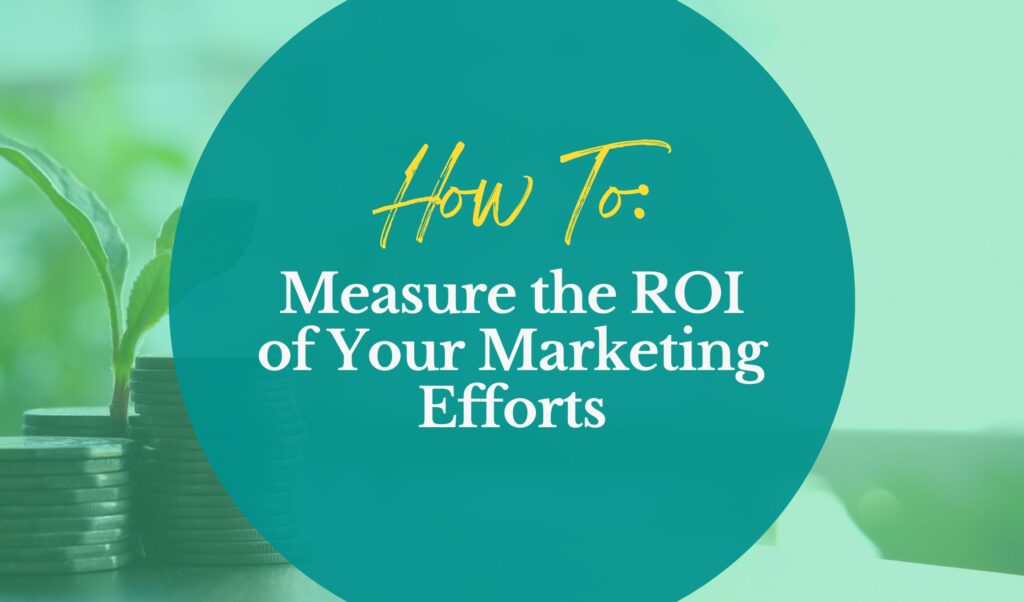
Calculating the real ROI of your efforts is essential for smarter, data-driven decision making. In this blog, we’re breaking down what marketing ROI means and how to measure it.
Let’s jump in!
What does marketing ROI really mean?
At its simplest, ROI is a basic formula.
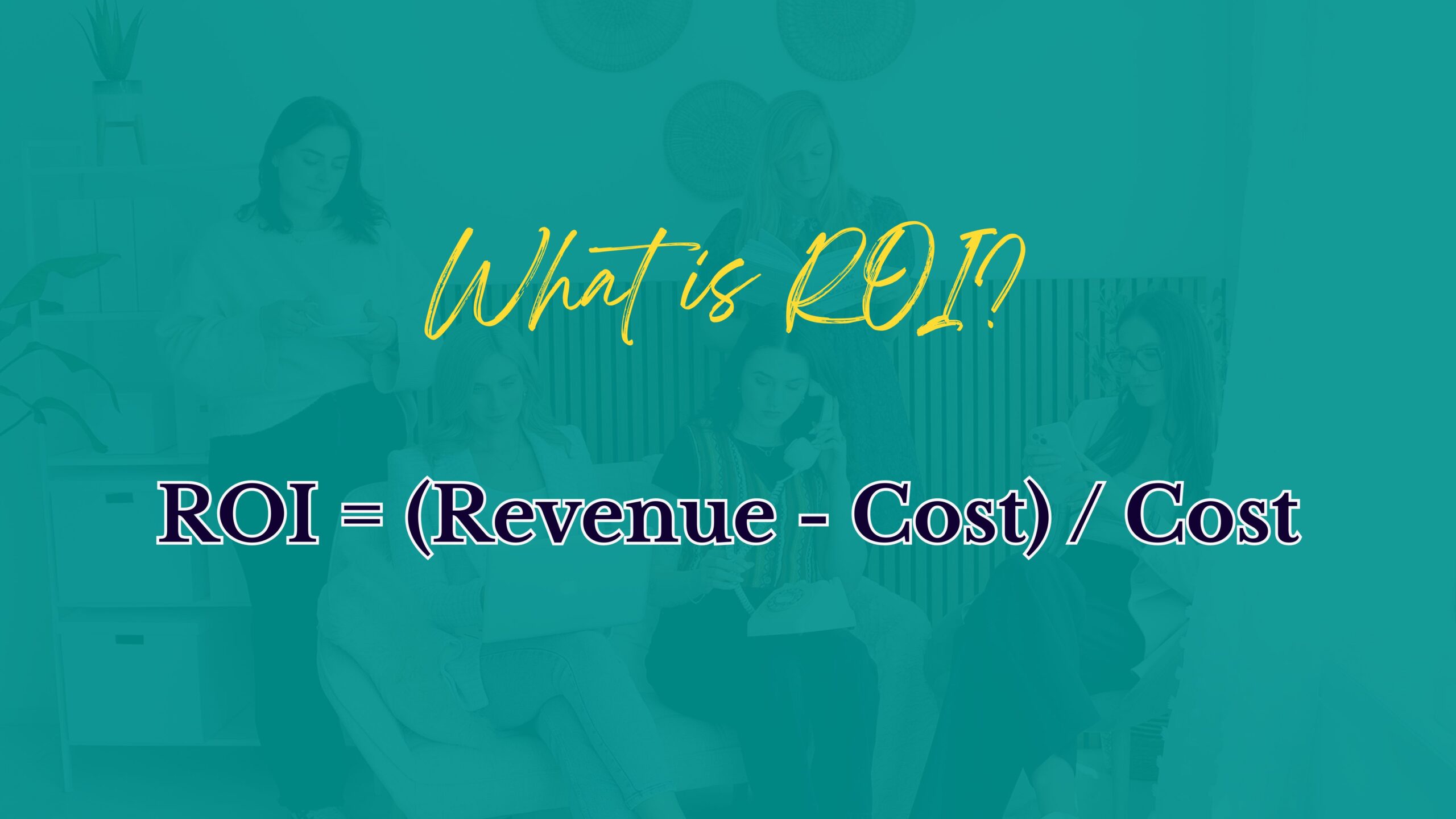
This formula tells you how much profit you’ve earned for every pound you’ve spent.
But, when it comes to marketing, it’s unfortunately not so straightforward.
Unlike a one-off investment or expense, marketing efforts span multiple channels, have long or non-linear sales cycles, and face other challenges – making it tricky to pinpoint exactly what is (and isn’t) driving your revenue.
For example:
- A customer might see one of your social media posts, receive an email, and read a blog post, and then convert weeks later. In this case, which channel do you give the credit to?
- Some campaigns influence sales indirectly, making their impact hard to measure. For example, a fashion brand’s TikTok highlighting sustainable outfits might indirectly increase their online orders, even though it didn’t link to the store directly.
- Other campaigns generate results months – or even years – after the initial investment.
That’s why calculating marketing ROI isn’t just about crunching numbers or zeroing in on vanity metrics – it’s about linking your marketing activities directly to business outcomes. Your goal is to understand which of your efforts are actually influencing your business revenue, growth, and profitability.
The common mistakes businesses make
Too often, we see businesses fall into the same traps when it comes to monitoring the impact of their marketing spend. These mistakes will make even the strongest of marketing efforts look ineffective – or worse, result in poor decision-making moving forward.
These include:
- Relying on vanity metrics, such as followers and impressions – overlooking the fact that these don’t correlate to actual business revenue or growth.
- Ignoring attribution, which is identifying which marketing touchpoint or channel is responsible for a sale, lead, or sign-up.
- Failing to track conversions properly, such as overlooking steps of the customer journey, leading to misleading data and poor budget decisions.
- Not integrating CRM or sales data with marketing analytics, missing out on vital visibility of what happens after a lead is generated.
The good news is that now you can recognise these mistakes, you’re able to shift your focus to properly understanding how your marketing contributes to tangible business outcomes.
How to measure marketing ROI
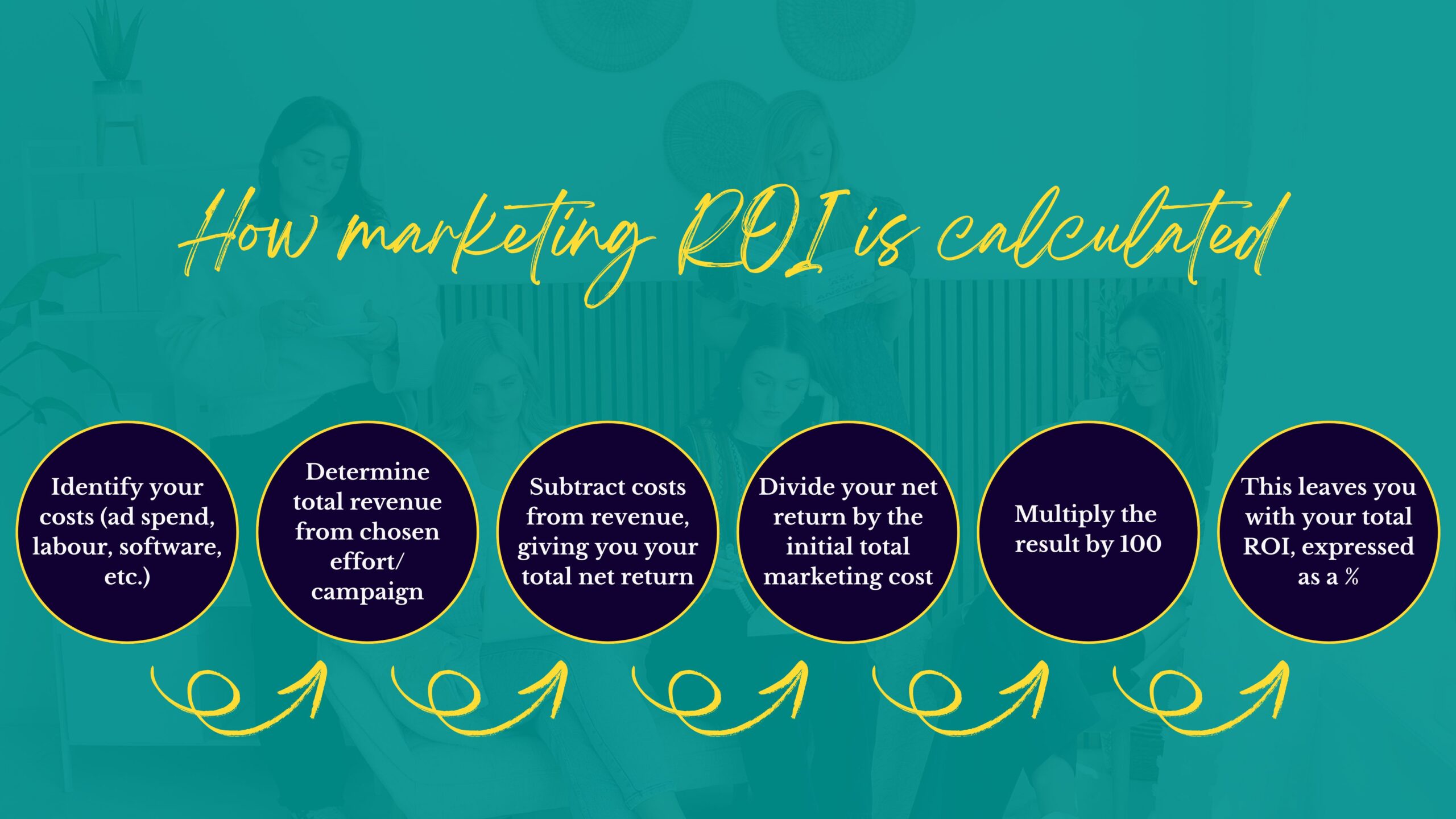
Here’s a simple framework for measuring your marketing ROI:
- Set clear goals: Define what success looks like to you, whether that’s X number of leads, sales, revenue, or something else. This gives you a benchmark to measure your efforts against.
- Assign a value to each goal: Identify what each individual lead or sale is worth to the business. For example, if a typical sale brings in £200, this will be the figure you use in your ROI calculations.
- Track accurately: Use tools like Google Analytics, HubSpot, or Meta Ads Manager to capture data across channels and campaigns.
- Connect marketing and sales data: Integrate your CRM or e-commerce data to visualise the full customer journey and ensure no business outcomes are missed.
- Calculate ROI: Apply the formula and interpret results. Are you seeing positive results? Which channels are performing the best?
- Adjust and optimise: Use these insights to improve your campaigns. View your marketing as an iterative process, doubling down on what’s working and tweaking what’s not to improve your ROI.
Key metrics to track alongside ROI
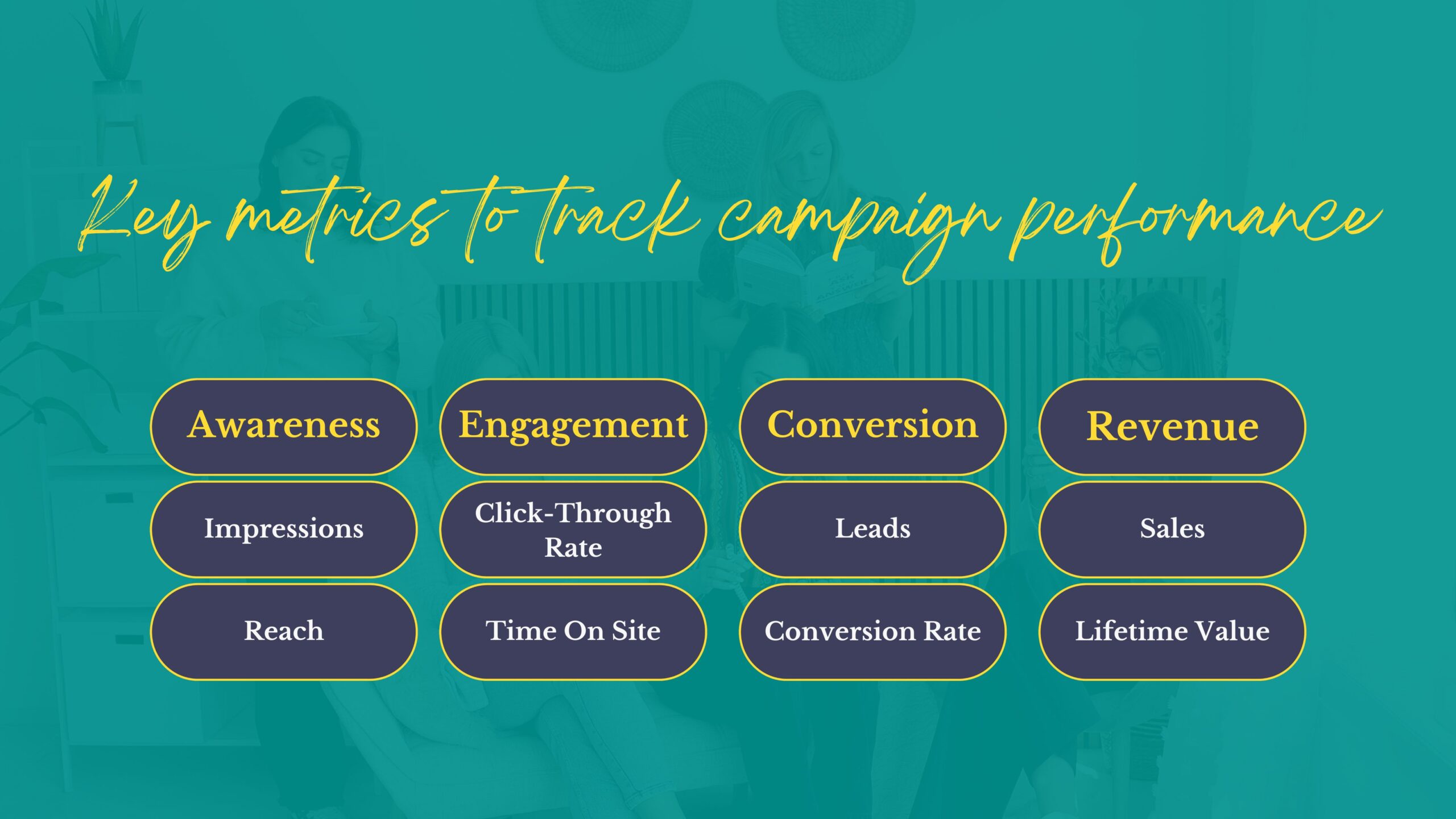
Monitoring ROI alone isn’t enough – you also want to track supporting KPIs to build a full picture of how your efforts are working:
Each stage of the customer journey can be paired with recommended KPIs to track:
Embrace tools and dashboards
Measuring marketing ROI becomes much easier when you have the right systems in place.
Here are some reliable tools you can count on to help you track, analyse, and optimise your marketing performance:
- Google Analytics 4 – This enables you to track website traffic, conversions, and user behaviour across your site. It is especially valuable for understanding the full customer journey.
- HubSpot/Salesforce – These CRM platforms allow you to link marketing activity directly to leads, deals, and revenue, giving you a clearer understanding of which campaigns are generating real business impact.
- Meta Ads Manager/Google Ads Dashboard – These will help you monitor paid campaigns, measure ad performance, and see which ads are driving conversions.
These platforms will give you a better view of how your marketing efforts are impacting revenue. They’ll make tracking your ROI simple, actionable, and reliable.
Shifting from data to decisions
Understanding the true impact of your marketing efforts is essential for making smarter, data-driven decisions and ensuring every pound you spend is pushing your business forward.
After all, if you’re not measuring ROI, you’re not marketing – you’re playing a guessing game.
Even small changes – such as setting clear goals and integrating marketing and sales data – can uncover huge opportunities for growth.
Ready to stop guessing and start knowing?
Let our team help you 10X your marketing efforts, better visualise how your channels are performing, and know where to invest for maximum impact.
Get in touch with us today!
Want more support achieving your marketing goals? Browse our free resources: