The New Year is a fresh start. It’s an opportunity to take stock of what worked for your business last year, what didn’t, and what you’d like to achieve in the year ahead.
No matter your business size or industry, starting the year with a clear understanding of your marketing and a structured plan for moving forward is essential. Doing so helps you stay focused, on track, and accurately prioritise your time and resources.
In 2026, audiences are more selective, platforms are more crowded, and ‘posting for the sake of it’ no longer works. As such, marketing success isn’t about doing more – it’s about doing the right things consistently. So, what are those right things?
Well, let’s find out…
This marketing checklist is for small to mid-sized businesses that want clearer, more consistent marketing. And to stop wasting their valuable time and budget. We’ll show you how to assess your current marketing position, refine your strategy, and set yourself up for a successful 2026.
Let’s jump in!
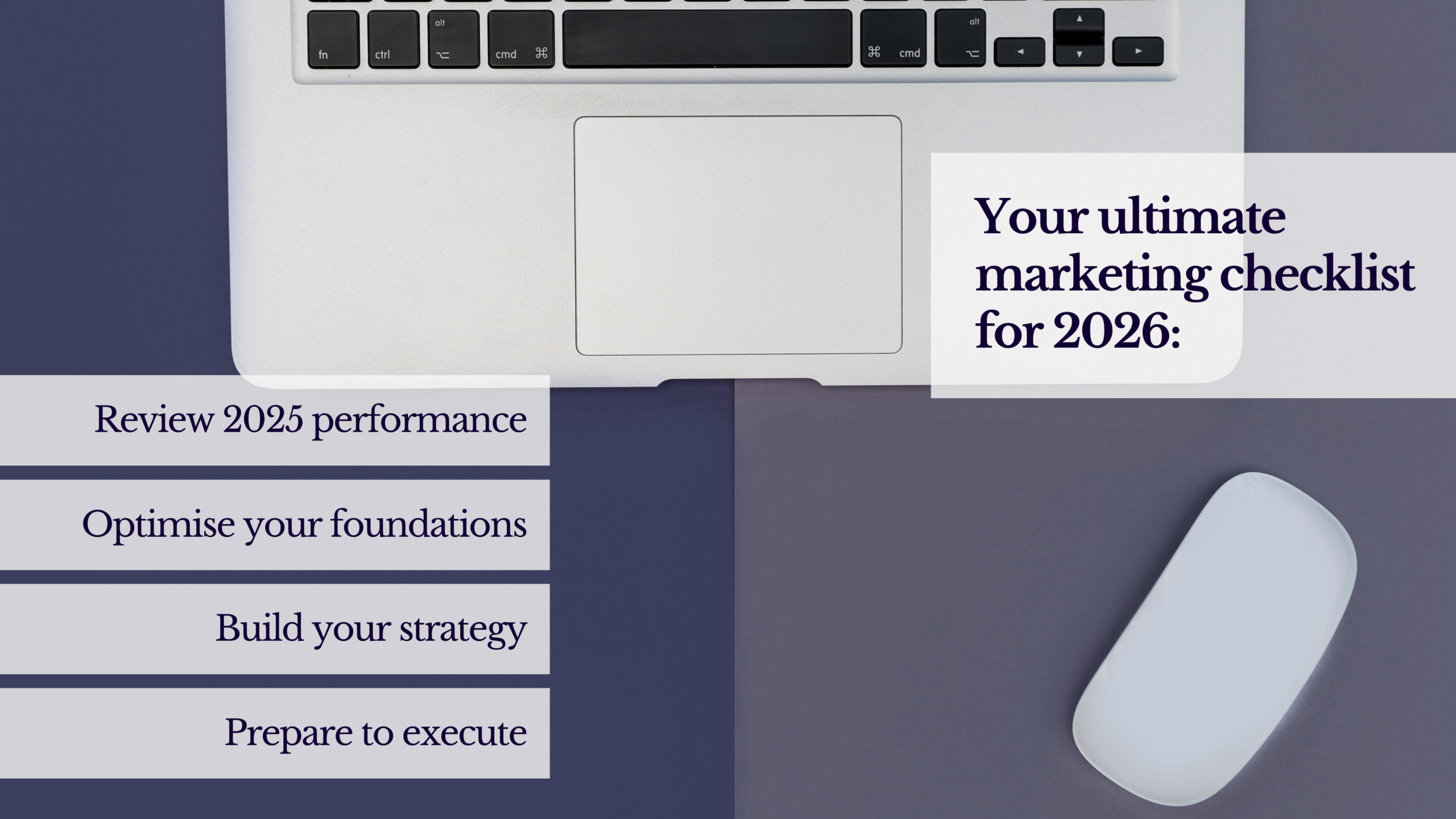
Review 2025 performance
Begin by reflecting on the past year, identifying what worked well, what didn’t, and the key lessons you learnt along the way. What worked in early 2025 may not deliver the same results in 2026, especially as algorithms, platforms, and buyer behaviour evolve.
We regularly see businesses skip this critical step, only to find themselves making the same mistakes year after year.
To-do list:
Analyse last year’s performance.
Review insights and analytics across your website, social media, email marketing, paid ad campaigns, and other channels. Identify what performed well and which platforms and strategies delivered tangible business results.
Check your financials.
Review your marketing spend from last year and compare it to your ROI. Consider your current financial position and how much you realistically have to play with when it comes to your marketing.
Revisit your why.
Your marketing efforts should directly align with your wider business goals. If your goals have evolved over the past year, your marketing strategy must, too. Understanding what drives you and where you want your business to be by the end of 2026 will make creating your marketing strategy a lot easier.
Revisit your audience.
Similarly, your target audience might have changed over the past year. Customer expectations in 2026 are shaped by speed, relevance, and trust, so understanding how your audience has changed is critical.
Competitor and industry scan.
Zoom out to consider where your marketing sits within your wider industry. What are your competitors doing that is better or worse? Are there emerging platforms or trends in your industry that should be considered? Have customer behaviour, search habits, or content preferences evolved?
Customer feedback.
Look at your reviews, carry out surveys, or have conversations with your customers. Identify any ongoing concerns, objections, or questions they might have.
Optimise your foundations
Before building your strategy for 2026, identify ways to strengthen your existing foundations.
Rather than jumping straight to new platforms or methods for lead generation, tighten and refresh the customer touch points you already have.
To-do list:
Refresh your brand messaging.
Across all channels, aim for consistency, value-adding content, and audience-focused messaging.
Revisit your website.
As well as refining your website’s messaging, check its mobile-friendliness, page speed, links, and user experience.
Update your socials.
Refresh your social media profiles by updating any bios, banners, logos, or pinned posts. Remove any platforms that no longer serve your business goals and set up new ones that’ll bring you closer to your target audience.
Perform a content audit.
Go through your recent content and see what’s driving leads, sales, and enquiries. Look beyond surface-level metrics and identify what content elicits real action (leads and sales, for example). From here, you’ll know what to do more of (and less of) and will identify impactful, high-performing content to repurpose across your channels.

Build your strategy
Now that you’ve taken stock on the previous year, and strengthened your marketing foundation, it’s time to get to work building your 2026 strategy.
To-do list:
Set SMART goals.
Define specific, measurable goals to help you focus and prioritise your efforts. This might look like onboarding 20 new clients by the end of the year or increasing sales by 20% by the end of Q2.
Define your KPIs.
To ensure you’re effectively tracking your efforts, identify your key metrics for success. Look beyond vanity metrics such as likes and follows and focus on valuable information such as conversion rates and marketing ROI.
Divide your budget.
You’ve already identified how much you can spend on marketing this year. Now it’s about allocating these funds strategically to unlock the greatest return on investment.
Set your content schedule.
And make it realistic! Remember, consistency is far better than starting strong but falling off a cliff by March. Start small and build up as and when your time and resources allow. For example, one blog a month and two social media posts a week across 2 channels might be where you start.
Map out your content calendar.
Create a loose content plan for the year, factoring in any campaigns you’ve already got in the works, seasonal promotions, and product or service launches. You want to strike a balance between planning ahead and leaving space for reactive, in-the-moment content.
Prioritise your channels.
Identify your primary and supporting channels by looking at where your audience spends most of their time. Avoid spreading yourself too thin, trying to be everywhere at once. Use customer journey mapping to ensure you’re showing up at the right place with the right messages.
Prepare to execute
Set yourself up for success by identifying ways to save time, streamline processes, and refine your approach as the year goes on.
To-do list:
Create a measurement and reporting plan.
This plan will take you from guessing to knowing how your marketing efforts are performing. Set up tracking tools such as a CRM or Google Analytics to visualise your chosen KPIs. Schedule check-ins throughout the year to assess the data and refine your strategy as needed.
Identify tool and skill gaps.
Assess whether new tools, members of staff, or an outsourced marketing partner (or a combination of all of these) are needed to bring your desired marketing plans and business goals to life.
Document processes and create templates.
Clear, documented processes help to save time and streamline your team’s collaboration. Create them for any repeated or shared task such as content creation, approvals, and publishing. Whether it’s reworking existing content across channels or creating graphic templates on Canva, look out for simple tasks you can do now to streamline your marketing throughout the year.
Identify where AI and automation can save time.
The smartest marketers in 2026 use AI to save time, while keeping their voice and relationships human. Whether it’s generating ideas, identifying marketing trends, or using scheduling tools to publish your content, look for where technology can fill gaps.
Marketing success in 2026
Marketing success this year won’t come from chasing every new platform or trend. It will come from clarity, consistency, and a strategy built on solid foundations.
By completing this marketing checklist now, you’ll be better placed to make smarter marketing decisions throughout the year. And to see results that actually support your business goals.
If this list feels useful but also a little overwhelming, you’re not alone. We often see businesses know what they should be doing – but struggle to find the time, clarity, or confidence to execute it consistently.
If you’d like help turning this checklist into a clear 2026 marketing strategy and tangible business growth, get in touch.
Want more support achieving your marketing goals? Browse our free resources: