Your business can be offering the best product or service, but without clear, compelling messaging, it might as well not exist.
Poor communication and weak messaging are silent killers for businesses, leading to missed opportunities and a struggle to connect with the right audience. Many business owners mistakenly believe that copywriting is “just writing”—a simple task anyone with basic literacy can handle. The truth, however, is far more complex and strategic.
Copywriting Isn’t “Just Writing” – It’s Strategic Communication
Copywriting is a sophisticated discipline that blends psychology, brand strategy, and various communication formats to achieve specific business goals. It’s about understanding human behaviour and tapping into the often-unconscious decision-making processes of your customers. Effective copy doesn’t just inform; it persuades, builds trust, and fosters connection.
Crucially, good copywriting establishes and maintains a consistent brand personality across all your communications. This consistency builds recognition and loyalty. Position it alongside your design, overall business strategy, and analytics – it’s just as vital to your success.
The Complete Copywriting Spectrum Your Business Needs
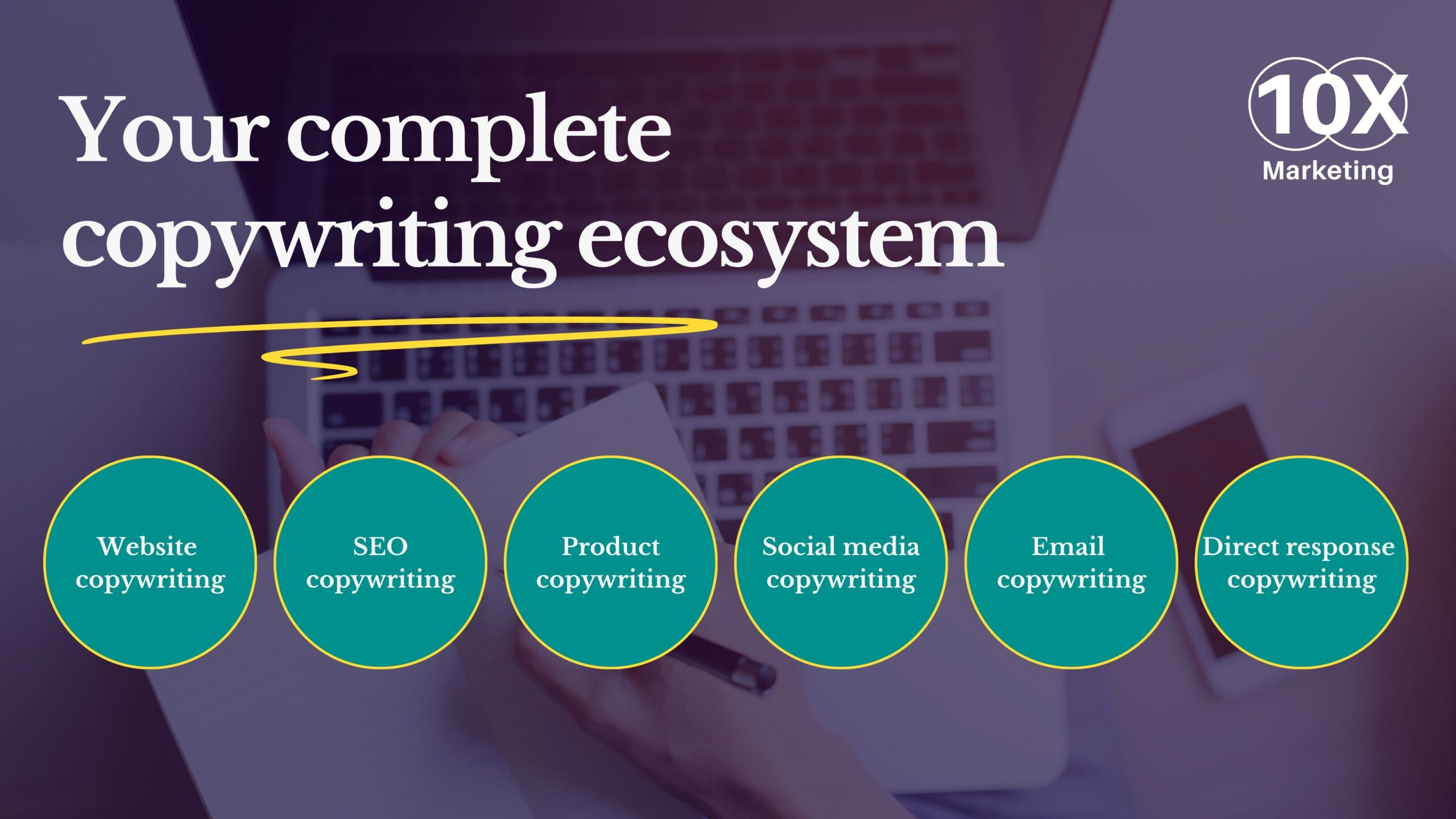
Your brand communicates at countless touchpoints. Each one is an opportunity to engage, inform, and convert. Here’s the complete spectrum of copywriting your business should be mastering:
Website Copywriting
Your website is your digital storefront, and its words are your silent sales force.
- Homepage messaging needs to instantly grab attention and convert casual visitors into interested prospects.
- About pages go beyond just facts to build trust and tell your unique story.
- Service/product pages move past simple descriptions to sell benefits and solutions.
- Landing page optimisation ensures that dedicated pages drive specific actions. Imagine the difference: a dull, jargon-filled website versus one that speaks directly to your customer’s needs and desires, turning browsers into buyers.
SEO Copywriting
This is where art meets algorithm. SEO copywriting isn’t just about stuffing keywords; it’s about balancing search optimisation with human readability.
- Keyword integration must feel natural, never sacrificing quality or flow.
- Meta descriptions and title tags are your tiny but mighty sales pitches in search results.
- Blog content needs to not only rank high but also genuinely engage and provide value. Remember, SEO copy must serve both search engine algorithms and the real humans reading your content.
Product Copywriting
This goes beyond listing features.
- It’s about translating features into tangible benefits that solve customer problems.
- Product descriptions should anticipate and overcome potential objections before they even arise.
- Category pages and product listings need to be clear, concise, and compelling.
- Technical specifications must be made accessible and understandable, even to non-experts.
Social Media Copywriting
Each platform has its own rhythm and audience.
- You need platform-specific messaging strategies to resonate effectively.
- Captions must be punchy and drive engagement, not just state the obvious.
- A smart hashtag strategy and optimisation gets your content seen by the right people.
- Community building hinges on a consistent, authentic brand voice. Insight: What works on LinkedIn for a professional audience might fall flat on TikTok, and vice-versa.
Email Copywriting
Your direct line to your audience requires a precise touch.
- Subject lines are your first impression – they dramatically impact open rates.
- Newsletter content needs to nurture relationships, providing value beyond just sales.
- Automated sequence development ensures a seamless customer journey from initial interest to conversion.
- Segmentation-based messaging allows you to speak directly to different audience groups with tailored content.
Direct Response Copywriting
This is about getting immediate action.
- Sales pages are meticulously crafted to convert visitors into customers.
- Call-to-action (CTA) optimisation ensures your buttons and links are irresistible.
- Techniques like urgency and scarcity motivate quick decisions.
- Effective objection handling in copy addresses concerns before they become roadblocks.
B2B vs. B2C Copywriting
The audience fundamentally changes the approach.
- B2B (Business-to-Business) copy is typically logic-driven, ROI-focused, and caters to longer sales cycles with multiple decision-makers. It often appeals to rational benefits and long-term partnerships.
- B2C (Business-to-Consumer) copy is usually emotion-driven, aiming for immediate gratification and often tapping into impulse purchases. It appeals to personal desires, aspirations, and quick solutions.
- Consider industry-specific considerations and how to target decision-makers differently in each scenario.

Why Your Business Can’t Afford to Neglect Any Format
In today’s interconnected world, prospects rarely convert after a single touchpoint. They interact with your brand across multiple formats – from a social media post to your website, an email, and a blog article – before making a decision. Maintaining a consistent brand voice across all these formats is paramount.
Each copywriting format supports and amplifies the others. A strong social media presence drives traffic to an optimised landing page, which then funnels prospects into a nurturing email sequence. When this ecosystem works in harmony, your brand message becomes undeniably powerful.
What happens if you neglect even one of these formats while your competitors invest in comprehensive copywriting? You risk:
- Lost leads: Visitors drop off, emails go unopened.
- Reduced conversions: Interest doesn’t translate into sales.
- Damaged brand perception: An inconsistent or unprofessional voice erodes trust.
- You’re essentially leaving money on the table.
Copywriting Strategy: Where to Start
Feeling overwhelmed? Don’t be. Here’s a starting point for your copywriting strategy:
- Audit Your Existing Content: Conduct a thorough review of your current website, social media, and email content. How consistent is the tone? Is the messaging clear and compelling?
- Prioritise Based on Goals: Which copywriting formats are most critical for your immediate business goals? (e.g., if you need more leads, focus on landing pages and website copy; if you need to nurture existing leads, prioritise email sequences).
- Specialist vs. Internal: Decide when it makes sense to train internal teams for day-to-day content versus hiring specialists (like us!) for strategic, high-impact copy.
Copywriting as a Business Investment, Not an Expense
It’s time to shift your perspective. Viewing copywriting as a mere cost is a fundamental mistake. Instead, recognise it as profit-generating infrastructure for your business. Quality copywriting isn’t an expenditure; it’s an investment that compounds over time.
Well-crafted copy boosts your SEO, improves conversion rates, builds stronger customer relationships, and ultimately drives sales. It works silently in the background, continually attracting, engaging, and converting your audience. The initial outlay for professional copywriting services pays dividends far beyond the immediate campaign. It creates a robust, persuasive voice that resonates, persuades, and grows your bottom line.
Don’t let valuable opportunities slip through the cracks due to ineffective messaging. We encourage you to audit your current copywriting gaps. Even better, let us help you identify where you can make the biggest impact.
Ready to transform your business’s voice into its most powerful asset? Get in touch with us today for a consultation.
Want to learn more about how to manage your marketing? Click here to view our free downloads!